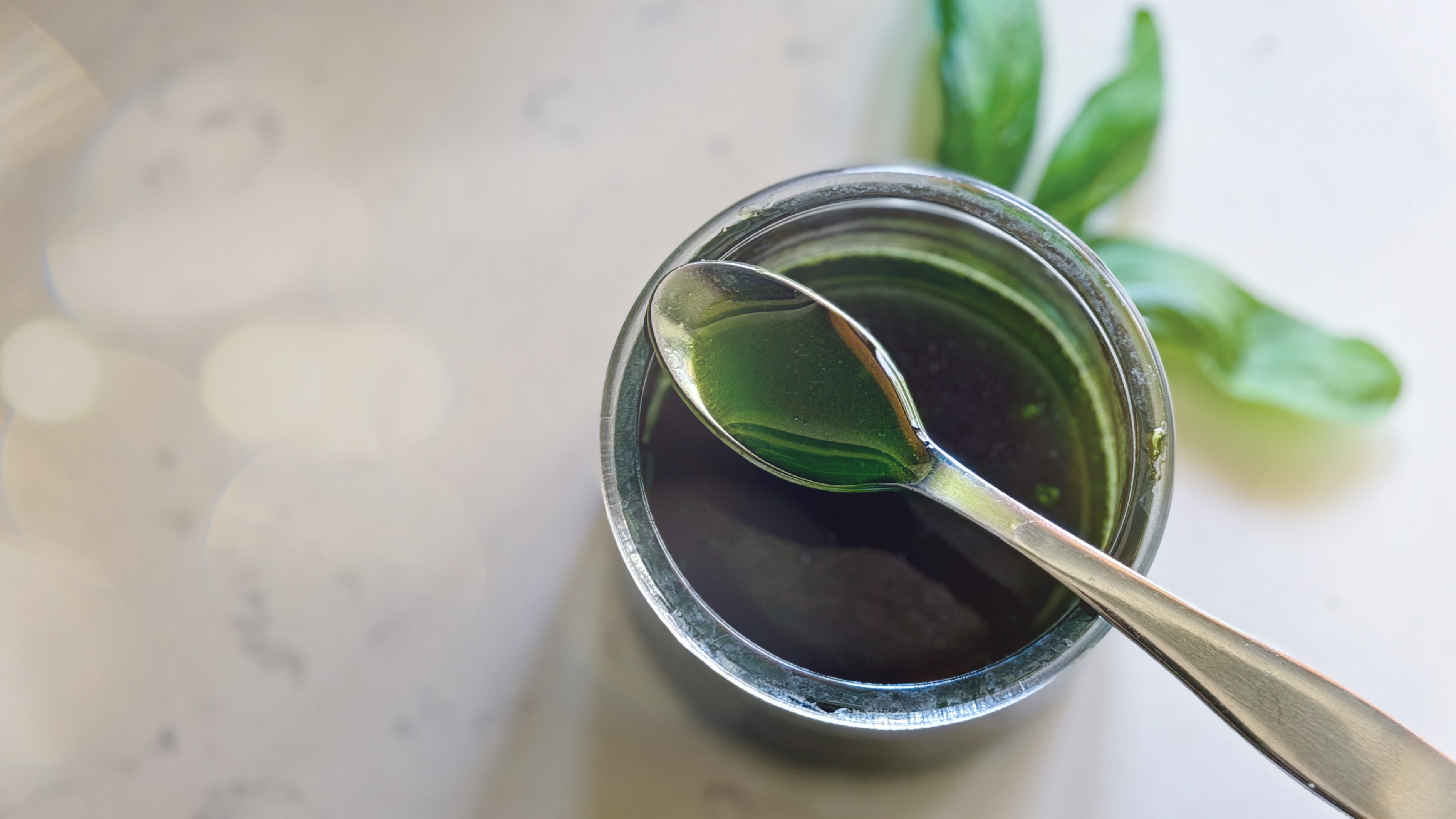
Most infused oils go brown. You blend basil with oil and within a few hours (or sometimes minutes) it oxidizes and turns murky, dull, bitter. And obviously that's not what we want.
Blanching changes everything. A quick dip in boiling water sets the color and flavor, kills the enzymes that cause browning, and gives you a bright green oil that stays that way. It's the difference between something that looks appetizing and something that looks like it's already gone bad.
This basil oil is for cocktails, but it works just as well on a tomato, a piece of fish, or anything else that deserves a whisper of basil without the texture of a leaf.
What You'll Need:
- 2 packed cups fresh basil leaves (stems removed)
- 1 cup good olive oil
- A pot of salted boiling water
- A Vitamix or high-powered blender
- Cheesecloth
- A fine mesh strainer
Instructions:
-
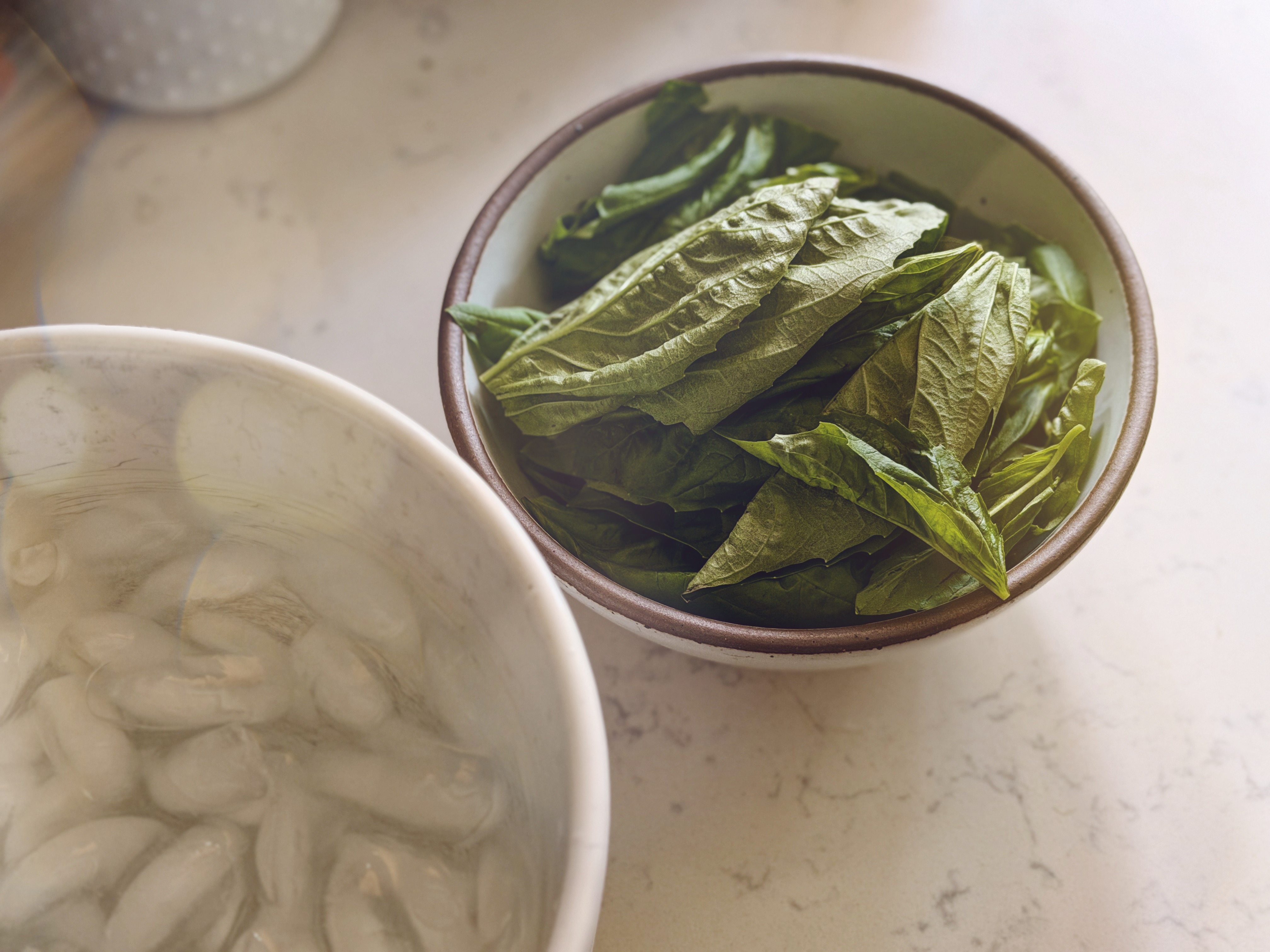
Blanch the basil. Bring a pot of salted water to a rolling boil. Add the basil leaves and let them blanch for just 30 seconds (maybe 45 if the leaves are particularly large). You're not cooking them, just setting the color. Immediately remove them with a slotted spoon and plunge them into an ice bath to stop the cooking. Let them sit for a minute, then drain well and pat dry with a clean towel. You want as little moisture as possible here.
-
Blend. Add the blanched basil to your blender with the olive oil. Blend on high until the mixture is completely smooth and homogeneous... this usually takes 2–3 minutes depending on your blender. You want the basil fully incorporated into the oil, no visible chunks.
-
Strain. Line a fine mesh strainer with cheesecloth and slowly pour the basil oil through it. Don't rush this step. Let gravity do the work. Once the bulk has drained, gather the corners of the cheesecloth and gently squeeze out the remaining oil but be gentle. You're not trying to extract every last drop; you're trying to keep the oil clear.
-
Bottle and refrigerate. Pour into a clean bottle and refrigerate. The oil will keep for about a week, maybe slightly longer. Cold slows oxidation. If it starts to look darker or brown, it's time to use it up or discard it.
Why Blanching Matters
Basil oxidizes quickly when bruised or blended. Chlorophyll breaks down, enzymes activate, and within hours you have a dark, bitter oil. Blanching fundementally changes those enzymes and sets the chlorophyll, which means your oil stays bright green and tastes fresh instead of grassy or harsh. Yeah it's an extra step, but it's the difference between an ingredient that looks and tastes like something you made with care and something that looks kinda blah.
How to Use It
- Cocktails: A small pour (or a few drops) over the top of a stirred drink, or mixed into a shaken sour for brightness and herbaceousness without the texture of muddled basil.
- Tomato-based drinks: A dash in a Bloody Mary variant or tomato juice cocktail.
- Gin and tonic: A pour across the top as a finishing touch.
- Any citrus cocktail: A float for herbal lift.
In the kitchen: salads, tomatoes, pasta, grilled fish, anything that would benefit from the taste of fresh basil without the leaf itself.
Final Pour
Basil oil is one of those ingredients that feels fancy but is genuinely simple. The blanching step is what makes it work: it's a small technique that solves a real problem and gives you something that lasts.
If you make it and use it in a cocktail, I'd love to know what you mixed it with. There's something special about the moment when someone tries something you've made and finds out what it can do. If you're interested in sharing discoveries like this, getting feedback, and connecting with other people who are thinking about drinks the same way you are, the Cocktail Club is where that happens. It's Simple Syrup Monthly taken a step further, where the community becomes the real ingredient.
Either way, thanks for being here.



Responses